


If your knees seem to know that rain is coming before you check the forecast, you are not alone.
Many people with joint pain say they notice more aching, stiffness or discomfort when the weather changes, especially when temperatures drop, humidity rises or a storm moves through.
But can your joints actually "feel" the weather?
The short answer is: possibly.
Research suggests that weather conditions may influence joint pain in some people, particularly those with osteoarthritis and other chronic pain conditions. However, the relationship is more complicated than simply saying, "Cold weather causes joint pain." [1–3]
Understanding what we know, and what we still do not know, can help you manage those uncomfortable weather-related days without assuming that every ache is something you simply have to live with.
Can Weather Really Make Your Joints Hurt?

There is evidence of an association between certain weather conditions and changes in joint pain, but researchers have not found one weather pattern that affects everyone the same way.
A 2023 systematic review and meta-analysis examined 14 studies involving osteoarthritis and weather. Researchers found that weather conditions appeared to be associated with osteoarthritis pain, with temperature and barometric pressure showing stronger associations than relative humidity. The authors also emphasized that more standardized research is needed to better understand the relationship. [1]
Another large study followed 2,658 people living with chronic pain for 15 months using smartphone-based symptom and weather tracking. Higher relative humidity, higher wind speed and lower atmospheric pressure were associated with a greater likelihood of a painful day. Importantly, the overall effects were modest. [2]
That means two things can be true at once:
Your pain may genuinely seem different when the weather changes, and weather may still be only one of many factors influencing how you feel.
What Does Barometric Pressure Have to Do With Joint Pain?

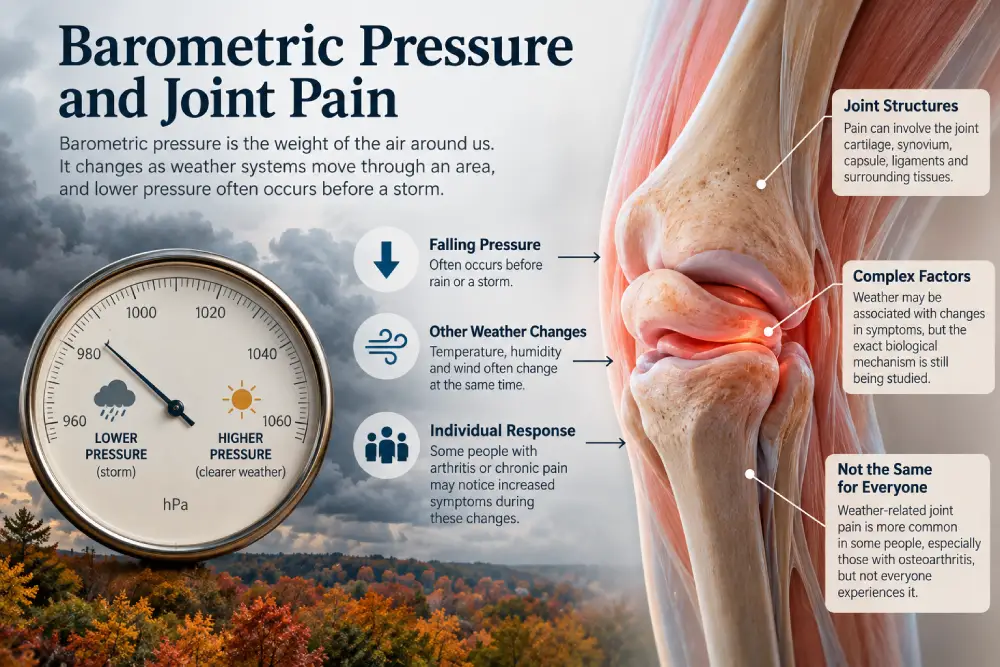
Barometric pressure, also called atmospheric pressure, is the force exerted by the air around us.
It changes as weather systems move through an area. A falling barometer often accompanies an approaching storm or changing weather pattern.
Researchers have found associations between atmospheric pressure and pain in some people with osteoarthritis and chronic pain. [1–3]
What is less certain is why.
You may have heard that lower air pressure allows tissues around a joint to "expand," creating pain. This is a popular explanation, but it should not be presented as proven fact. Researchers are still investigating the biological mechanisms that could explain weather sensitivity.
Pain is complex. In an arthritic joint, pain can involve structures such as the synovium, subchondral bone, joint capsule, ligaments and surrounding tissues, as well as changes in how the nervous system processes painful signals. [4]
So, while barometric pressure may be associated with changes in symptoms, we cannot yet say that a drop in pressure directly causes a joint to swell or expand enough to create pain.
Why Do My Joints Feel Stiffer When It Gets Cold?
Cold weather is another commonly reported trigger.
Research on temperature and joint pain has produced mixed results, although several studies have found associations between lower temperatures and increased osteoarthritis symptoms. [1,3]
There may also be a much simpler contributor: we tend to move differently when it is cold outside.
Think about an Ohio summer day compared with a cold, damp fall morning.
You may spend less time walking outside. You may skip yard work, outdoor exercise or your usual activities. You may sit longer and move less throughout the day.
For people with osteoarthritis, periods of inactivity can contribute to stiffness. The National Institute of Arthritis and Musculoskeletal and Skin Diseases notes that osteoarthritis commonly causes stiffness after resting or being inactive. [5]
So sometimes what feels like "the cold getting into my joints" may involve several things happening at once: the weather itself, changes in activity, existing joint disease and how your body responds to those conditions.
Does Rain Cause Joint Pain?

Not necessarily.
Rain gets blamed for joint pain frequently, but research has not established rainfall itself as a consistent cause of increased pain.
Rainy weather usually arrives with several other changes occurring at the same time, including shifts in atmospheric pressure, humidity, temperature and sometimes wind.
That makes it difficult to separate the effect of the rain from everything happening around it.
For example, the large smartphone study of people with chronic pain found associations with humidity, wind speed and atmospheric pressure, but rainfall itself was not significantly associated with pain events. [2]
So if you feel worse on rainy days, your experience may be real, but the rain may not be the part of the weather system affecting you.
Why Does Weather Affect Some People but Not Others?

This is one of the reasons the research can be confusing.
Not everyone with arthritis experiences weather-related symptoms, and even people who do may react to different conditions.
One person may notice increased knee stiffness before a storm. Someone else may feel worse during very cold weather. Another person with similar joint changes may notice no relationship at all.
Pain is influenced by more than what can be seen on an X-ray.
Previous injuries, inflammation, muscle strength, activity level, sleep, stress, joint mechanics and changes in the nervous system can all influence the way pain is experienced.
This is also why a change in symptoms deserves more consideration than simply saying, "It's the weather."
Weather might be contributing to what you feel, but it does not tell us why that particular joint hurts in the first place.
Which Joints Can Be Affected by Osteoarthritis?

Osteoarthritis can affect many joints, but the National Institute of Arthritis and Musculoskeletal and Skin Diseases identifies several common locations: [5]
Osteoarthritis is not simply "old joints wearing out." It is a condition involving changes throughout the joint and surrounding tissues.
Symptoms can include pain during joint use, stiffness after rest, swelling, decreased range of motion and sometimes a feeling that a joint is unstable. [5]
A history of an old injury can also matter. A knee, ankle, shoulder or other joint that was injured years ago may develop different mechanics or degenerative changes over time.
That does not necessarily mean weather is damaging the joint again when it hurts. It means an already symptomatic joint may be more noticeable under certain circumstances.
What Can I Do When the Weather Makes My Joints Feel Worse?

You cannot control the weather, but you can control some of the factors that influence how your joints function.
1. Keep moving
When a joint feels stiff, the instinct can be to stop using it.
For most people with osteoarthritis, appropriate physical activity is actually an important part of symptom management.
Exercise can help reduce joint pain and stiffness while improving flexibility, strength and endurance. [6]
You do not necessarily need an intense workout. Walking, gentle range-of-motion exercises, cycling, swimming and other joint-friendly activities can help keep your body moving. [6,7]
2. Warm up before activity
If your body feels particularly stiff on a cold morning, give yourself a little more time before jumping into strenuous activity.
Gentle movement and a gradual warm-up can help prepare your muscles and joints for activity.
This can be especially helpful before fall yard work, exercise, golf, recreational sports or a physically demanding workday.
3. Maintain strength around the joint
Your joints do not work alone.
Muscles help support and control movement around the knees, hips, shoulders and other joints. Strengthening exercises are commonly included in osteoarthritis management because stronger surrounding muscles can help support joint function. [6]
The right exercises depend on the joint involved, your current health and the reason for your pain.
4. Pay attention to patterns
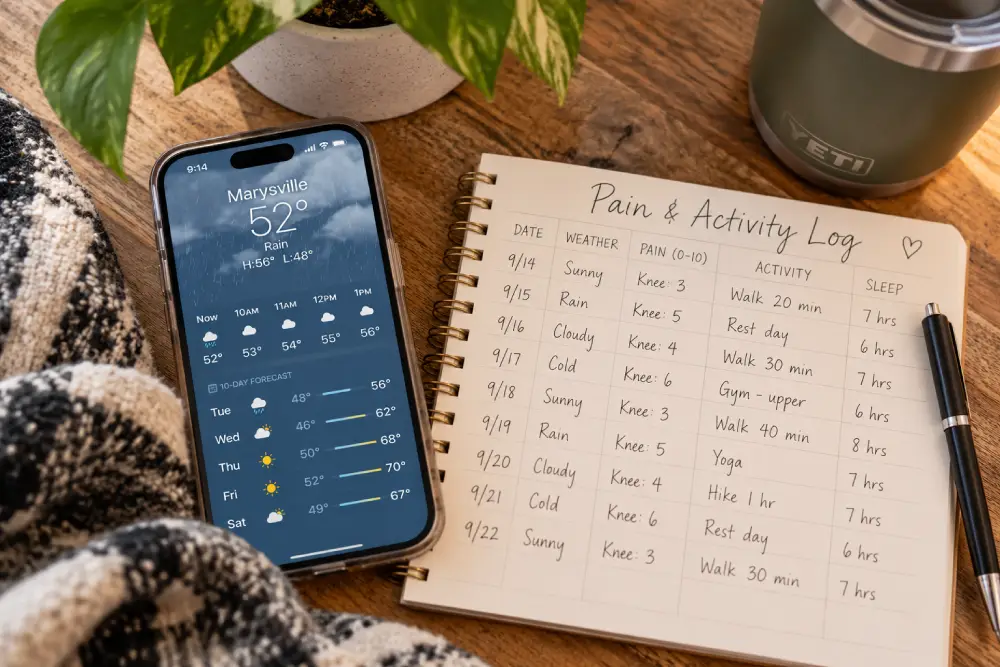
If you are convinced that the weather affects your symptoms, try tracking them.
For a few weeks, make a quick note of:
- Where you hurt
- How severe the pain or stiffness feels
- What activities you did that day
- Whether you exercised
- How well you slept
- Major weather changes
You may discover that weather is part of the pattern, but you may also identify other triggers you had not noticed.
For example, the painful day after a cold front may also have followed six hours of yard work the day before.
That information can be much more useful than simply knowing that your knee hurts when it rains.
When Is Joint Pain More Than "Just the Weather"?
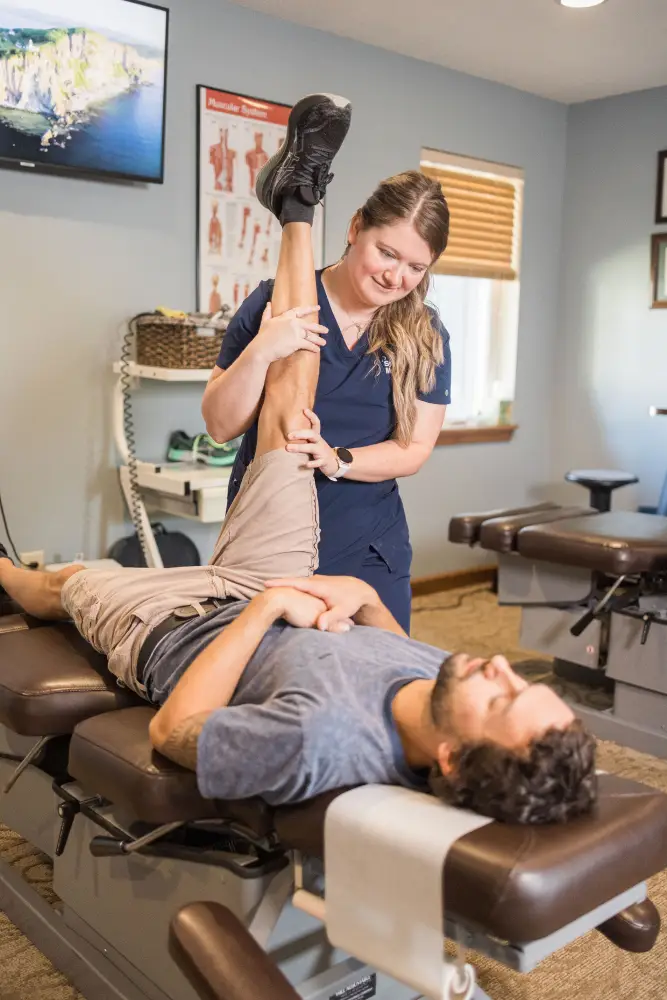
A weather change should not automatically explain new or worsening joint pain.
Consider having the joint evaluated if pain is persistent, worsening, interfering with your normal activities or repeatedly returning.
You should also contact a healthcare provider if joint pain occurs with symptoms such as swelling, redness, tenderness, warmth or fever. A hot, swollen joint, particularly when accompanied by fever, can require prompt medical evaluation. [8,9]
Similarly, significant pain following an injury, inability to use or bear weight through a joint, or a noticeable change in the joint's appearance should not be dismissed as weather sensitivity.
The goal is not simply to make the painful area feel better temporarily. It is to understand why it hurts.
What Can a Joint Evaluation Tell You?

If the same knee, hip, shoulder, ankle or other joint seems to flare every time the seasons change, an evaluation can help determine whether something else is contributing to the pattern.
Depending on your symptoms and history, an evaluation may look at things such as:
- Joint range of motion
- Strength and stability
- Previous injuries
- Areas of tenderness or swelling
- How the joint moves during everyday activities
- Whether symptoms may be coming from the joint itself or another structure
- Whether imaging or additional medical evaluation is appropriate
This is particularly important because "joint pain" is a symptom, not a diagnosis.
Osteoarthritis is one possible cause, but joint discomfort can also occur with injuries, tendon problems, bursitis, inflammatory conditions and many other musculoskeletal or medical issues. [8]
Finding the likely source of the problem helps determine what kind of care makes sense.
Joint Pain Care in Marysville, Ohio

At Synergy Medical Team, we take an integrated approach to musculoskeletal and joint pain.
Our team includes chiropractic and medical providers who can evaluate your symptoms and determine which type of care may be appropriate. Dr. Patrick Cooper is also a Certified Chiropractic Extremity Practitioner (CCEP), with additional training focused on joints outside the spine.
Depending on the cause of your symptoms, your care plan may involve chiropractic or musculoskeletal care, movement recommendations or other treatment options available through our integrated team.
And sometimes the most important part of an evaluation is determining that your symptoms need a different type of medical care.
If your knees seem to predict every Ohio cold front, your shoulder aches whenever a storm approaches, or an old injury has started bothering you again, you do not have to guess about what is happening.
Start by finding out why the joint hurts.
Frequently Asked Questions About Weather and Joint Pain
Can barometric pressure really cause joint pain?
Research has found associations between atmospheric pressure and pain in some people with osteoarthritis and chronic pain, but researchers have not established that changes in barometric pressure directly cause joint pain. The biological mechanism remains uncertain. [1–4]
Why do my knees hurt before it rains?
A storm can bring simultaneous changes in atmospheric pressure, humidity, temperature and wind. Studies suggest some of these factors may be associated with increased pain in certain people, but rainfall itself has not consistently been shown to cause joint pain. [1,2]
Does cold weather make arthritis worse?
Cold weather may make symptoms feel worse for some people, but that does not necessarily mean cold weather is worsening the underlying arthritis. Lower temperatures have been associated with increased osteoarthritis symptoms in some research, and reduced activity during cold weather may also contribute to stiffness. [1,3,5]
Is weather-related joint pain a sign of arthritis?
Not necessarily. Joint pain has many potential causes. Osteoarthritis is one possibility, but injuries, tendon problems, bursitis, inflammatory conditions and other problems can also cause joint discomfort. Persistent or worsening pain should be properly evaluated. [8]
Should I exercise when my joints are stiff?
For many people with osteoarthritis, regular physical activity is recommended and can improve pain, stiffness, function and strength. The appropriate type and intensity of exercise depends on your health and the condition of the joint. [6,7]
Find Out Why Your Joint Hurts
Synergy Medical Team
16705 Square Drive
Marysville, OH 43040
Serving Marysville, Plain City, Dublin, Delaware, Bellefontaine and surrounding Central Ohio communities.
Call 937-642-4400 →References
1. Wang L, Xu Q, Chen Y, et al. Associations between weather conditions and osteoarthritis pain: a systematic review and meta-analysis. Annals of Medicine. 2023;55(1):2196439.
2. Dixon WG, Beukenhorst AL, Yimer BB, et al. How the weather affects the pain of citizen scientists using a smartphone app. npj Digital Medicine. 2019;2:105.
3. McAlindon T, Formica M, Schmid CH, Fletcher J. Changes in barometric pressure and ambient temperature influence osteoarthritis pain. The American Journal of Medicine. 2007;120(5):429–434.
4. Hunter DJ, McDougall JJ, Keefe FJ. The symptoms of osteoarthritis and the genesis of pain. Rheumatic Disease Clinics of North America. 2008;34(3):623–643.
5. National Institute of Arthritis and Musculoskeletal and Skin Diseases. Osteoarthritis: Symptoms, Causes & Risk Factors. National Institutes of Health.
6. National Institute of Arthritis and Musculoskeletal and Skin Diseases. Osteoarthritis: Diagnosis, Treatment, and Steps to Take. National Institutes of Health.
7. Centers for Disease Control and Prevention. About Physical Activity and Arthritis.
8. Mayo Clinic. Joint Pain: Causes and When to See a Doctor.
9. Cleveland Clinic. Joint Pain: Causes & Treatment.
This article is for educational purposes and is not intended to diagnose or treat a medical condition. Individual symptoms and treatment needs vary. Seek appropriate medical evaluation for new, severe or worsening symptoms.