


Back-to-school season means new teachers, new schedules, sports practices, homework, and often a major change in how much time children spend sitting, carrying a backpack and moving throughout the day.
For parents, an occasional complaint of being "sore" after practice or tired after a long school day may not seem unusual. But when a child repeatedly complains about back pain, neck pain, shoulder discomfort, headaches, foot pain or stiffness, it deserves attention.
The short answer: Back and neck discomfort in children can have many causes. A backpack can temporarily contribute to strain when it is heavy or poorly fitted, while sports, repetitive activity, injuries and other musculoskeletal issues can also play a role. Persistent pain should not simply be written off as "growing pains" or poor posture. A healthcare professional can evaluate what is happening and determine whether treatment or further medical evaluation is appropriate. [1]
At Synergy Medical Team in Marysville, Ohio, we work with families and children of different ages, from infants through active teenagers and student athletes.
Here are some of the things parents should watch for as school gets back into full swing.
1. Pay Attention When Back or Neck Pain Keeps Coming Back
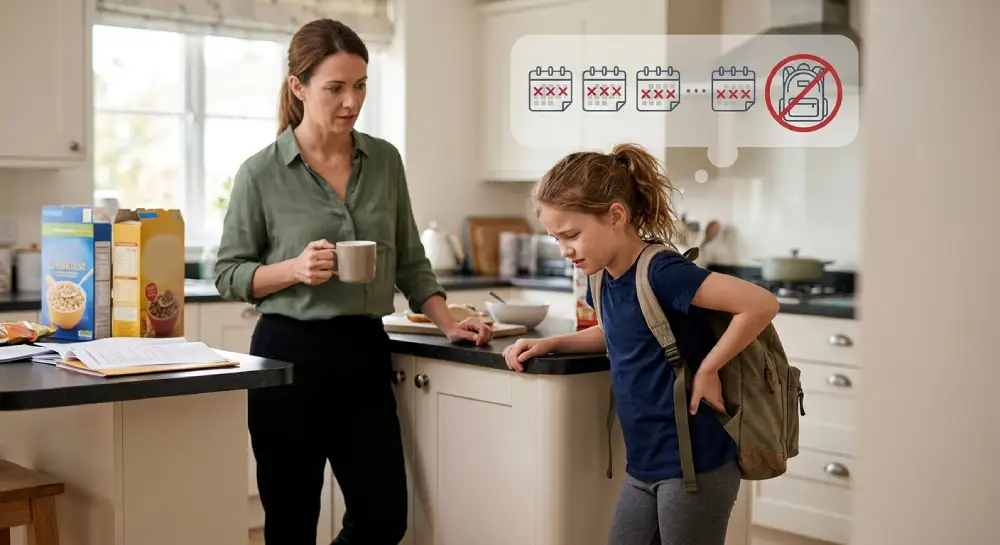
Children do not always describe pain the same way adults do.
Instead of saying, "My lower back hurts," a younger child may say:
Older children and teenagers may simply assume soreness is normal, especially if they participate in sports.
That makes patterns important.
An isolated ache after an unusually active day is different from discomfort that occurs repeatedly, interferes with sleep, changes the way a child walks or moves, limits sports participation or continues for several weeks.
Back pain is not unheard of in children and becomes more common as children move into adolescence. However, pediatric back pain deserves thoughtful evaluation because its possible causes range from ordinary muscular soreness to injuries and less-common medical conditions. [7]
One of the simplest back-to-school habits parents can start is asking not only, "How was school?" but also, "How does your body feel?"
Sometimes children won't mention discomfort until someone asks.
2. Check the Backpack. But Don't Blame Everything on the Backpack
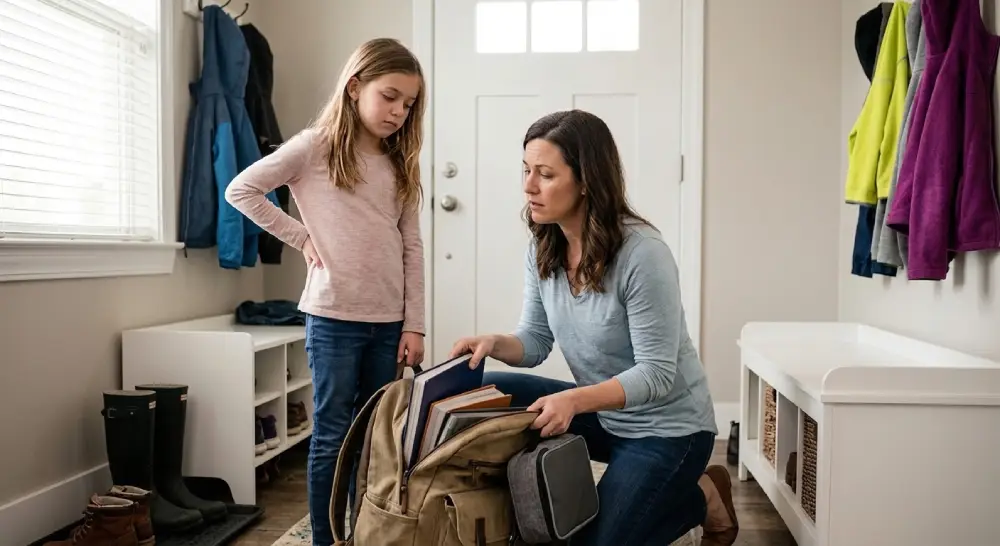
Backpacks get a lot of attention every August, and for good reason: a poorly fitted or excessively heavy bag can be uncomfortable.
The American Academy of Pediatrics recommends choosing a correctly sized backpack with two broad shoulder straps, placing heavier items closest to the child's back, using both straps and keeping the pack close to the body. Its backpack guidance recommends keeping the loaded backpack to no more than about 15% of the child's body weight. [1]
If a child weighs 80 pounds, for example, 15% is about 12 pounds.
Parents should also look for signs that the load isn't working well for their child:
- Leaning noticeably forward while wearing the backpack
- Difficulty getting the backpack on or off
- Straps digging into the shoulders
- Complaints of neck, shoulder or back discomfort
- Carrying the bag over only one shoulder
- A backpack hanging far away from the body
- Bringing unnecessary books or supplies back and forth every day
An easy solution is a weekly backpack cleanout. Old papers, unused notebooks, sports gear and other forgotten items can add up quickly.
Does a heavy backpack actually cause back pain?
Here's where it is important to be accurate.
Although backpacks certainly can be uncomfortable and the American Academy of Pediatrics recommends sensible weight and fitting precautions, research has not established that backpack weight by itself causes children to develop back pain or long-term spinal problems.
A systematic review involving more than 72,000 children and adolescents did not find convincing evidence that backpack weight, design or carrying method increased the risk of developing back pain. [2]
A separate meta-analysis similarly found no clear association between carrying heavier schoolbags and low-back pain. [5]
That is an important distinction.
Good backpack habits are still worthwhile, but recurring pain shouldn't automatically be blamed on the backpack.
If changing the backpack doesn't change the symptoms, it may be time to look deeper.
3. School Changes How Much and How Often Kids Move
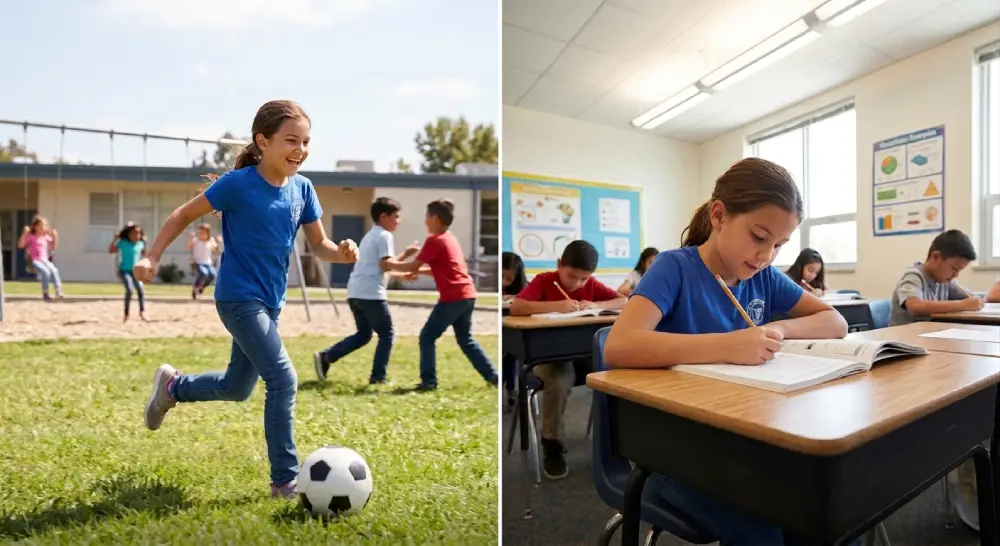
Summer and the school year can look dramatically different.
A child who spent the summer swimming, playing outside or moving freely may suddenly spend much of the weekday sitting in classrooms, followed by transportation home, homework and recreational screen time.
Does sitting cause back pain?
The research is more complicated than social media sometimes makes it sound.
A 2025 systematic review found a small association between sedentary behavior and spinal pain when researchers looked at children at a single point in time. However, higher-quality longitudinal evidence did not establish that sedentary behavior causes children to develop spinal pain. [4]
A 2026 review examining sedentary behavior and low-back pain in children and adolescents also reported mixed findings and cautioned against assuming cause and effect. [3]
So parents do not need to police a mythical "perfect posture" every second of the school day.
A more practical goal is simply regular movement.
After a long period of homework or screen time, encourage children to get up, refill a water bottle, walk around, stretch comfortably or spend a few minutes outside.
Movement is a normal part of a healthy day. The best posture is rarely one position held for hours.
4. Watch for Neck and Shoulder Complaints Around Screens
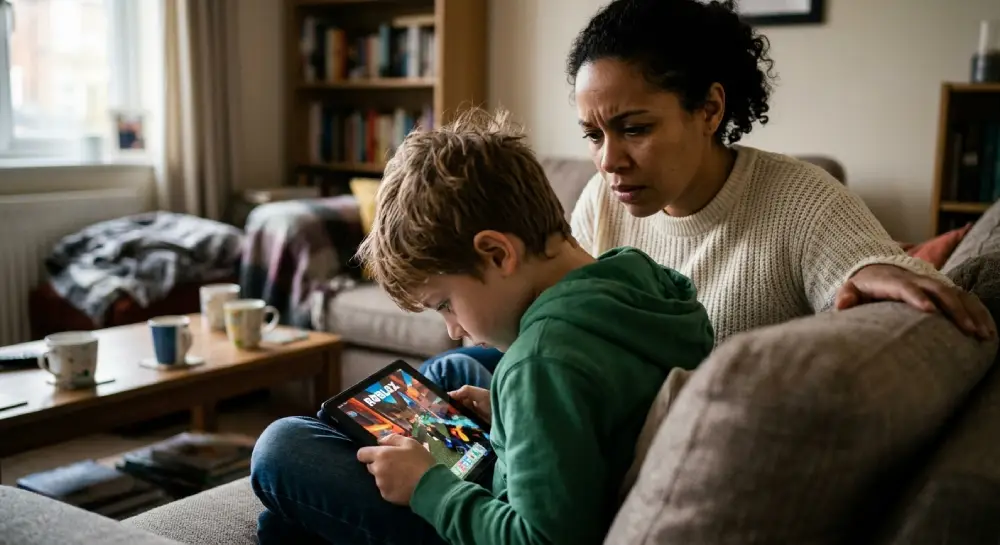
Tablets, laptops and phones are now part of both education and recreation.
That does not mean every child who looks down at a phone is damaging their neck.
There is, however, evidence of an association between higher amounts of sedentary behavior, including prolonged mobile-phone use, and neck pain among children and adolescents. A systematic review and meta-analysis found a small association while also noting that better long-term research is needed. [9]
Rather than telling children to "sit up straight" all evening, try changing the environment:
- Raise a laptop or tablet when practical
- Let them change positions
- Build short movement breaks into homework
- Avoid spending the entire evening in one position immediately after spending much of the school day seated
And pay attention when the complaint becomes repetitive.
A child who regularly develops neck or shoulder discomfort during homework may benefit from having their movement, range of motion and musculoskeletal function evaluated rather than simply being reminded about posture.
5. Back-to-School Also Means Back to Sports
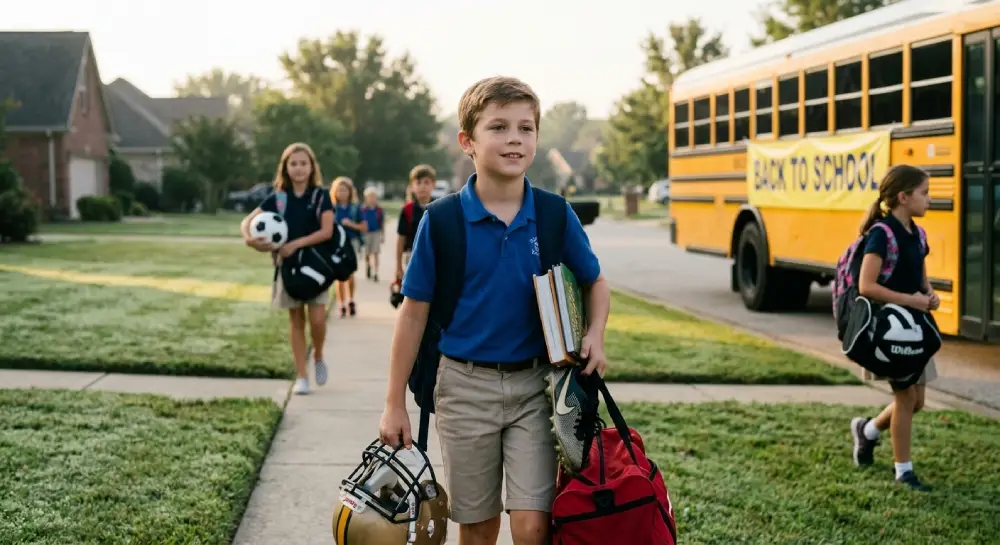
For many Central Ohio families, returning to school also means returning to football, soccer, volleyball, cheer, cross-country, golf and other fall sports.
That is a good thing. Physical activity provides enormous benefits for children.
But the beginning of a sports season can create another sudden shift in workload, especially for a young athlete who was less active during the summer and quickly moves into frequent practices, conditioning and competition.
Overuse injuries occur when repeated stress exceeds the body's opportunity to recover. The American Academy of Pediatrics recommends building in appropriate recovery, avoiding dramatic increases in training volume and paying attention when pain begins to appear during or after activity. [6]
Signs a student athlete may need to be evaluated include:
- Pain that repeatedly returns with practice
- Pain that begins affecting performance
- Persistent soreness in the same location
- Reduced range of motion
- Limping or changing normal movement
- Point tenderness over a bone
- Pain that causes the athlete to stop participating
- Pain that continues even during rest
- Numbness, tingling or weakness
"Playing through it" isn't always the right answer.
That is particularly important in growing athletes. Bones, muscles, tendons and other tissues are still developing, and some pediatric sports problems require a different approach than ordinary adult soreness.
If something hurts consistently, finding out why is more useful than simply telling a child to push through it.
6. Don't Forget About the Feet
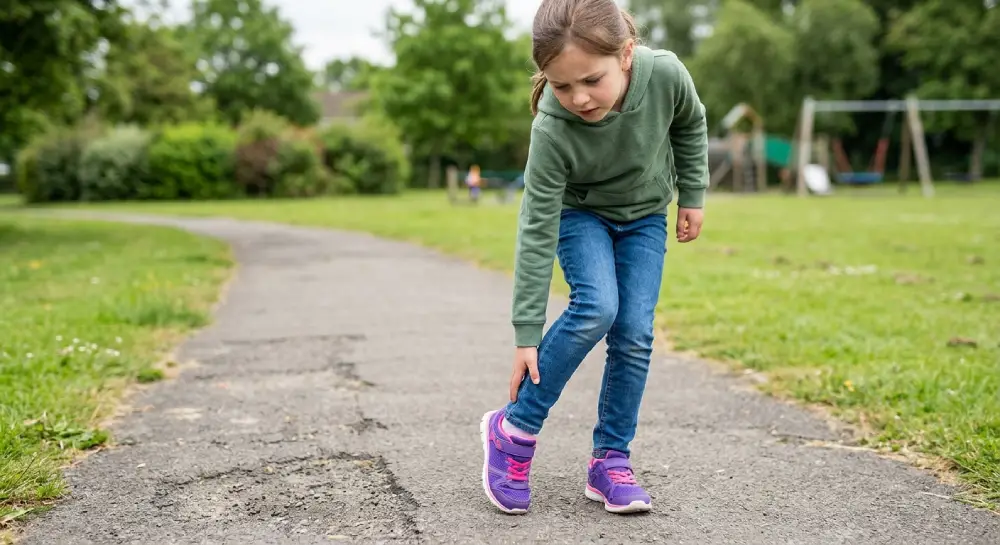
When parents think about a child's back or knees, the feet may not immediately come to mind.
But for an active child, the feet are the foundation of nearly everything they do: walking through school, running at practice, jumping, cutting, standing and competing.
Parents may notice:
- Repeated foot or heel discomfort
- Uneven shoe wear
- Complaints during running
- Difficulty finding comfortable shoes
- An unusual walking or running pattern
- Ankle, knee or lower-extremity complaints
- Feet that become painful with activity
Not every flat foot, or every unusual-looking foot, needs treatment.
In fact, research on pediatric orthotics shows why individualized evaluation matters. A Cochrane review concluded that evidence does not support routinely treating healthy, pain-free children with flexible flat feet simply because their feet appear flat. Orthotics may be considered in specific symptomatic conditions, but there isn't a one-size-fits-all recommendation for every child. [8]
That's exactly why an assessment should come before a product.
At Synergy Medical Team, Dr. Patrick Cooper, DC, CCEP, is a Certified Chiropractic Extremity Practitioner with a particular focus on extremities and joint health. He also has more than 25 years of experience with custom-molded orthotics.
If a child's feet, ankles or lower extremities are causing problems, the first step is determining what is actually happening and whether additional support is appropriate.
7. Know When a Child's Back Pain Needs More Than a Routine Appointment
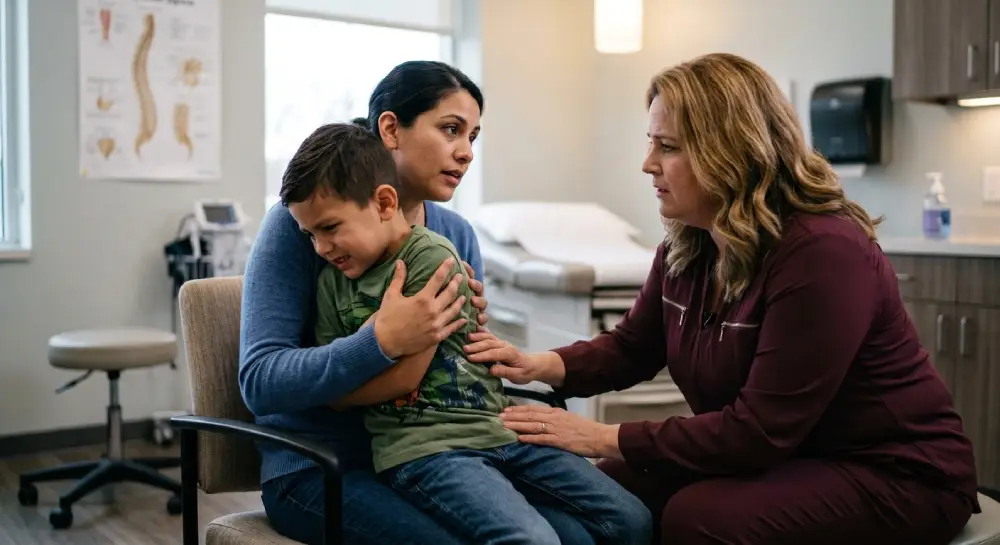
Most childhood aches are not signs of something dangerous.
Still, parents should know that certain symptoms deserve prompt medical attention.
Back pain should be evaluated more urgently when it is associated with concerns such as:
- Significant trauma
- Neurologic symptoms such as weakness or loss of sensation
- Bowel or bladder changes
- Fever or other systemic illness
- Persistent nighttime pain
- Constant or progressively worsening pain
- Significant bony tenderness
- Symptoms in a very young child
Clinical guidance also recommends more immediate investigation when pediatric back pain persists beyond several weeks or is associated with certain neurological or systemic symptoms. [7]
That doesn't mean parents should panic when a child says their back hurts.
It means children's pain deserves the same basic principle we use for adults:
"Listen first. Evaluate when appropriate. Don't guess."
8. What Can a Chiropractic Evaluation Tell You?
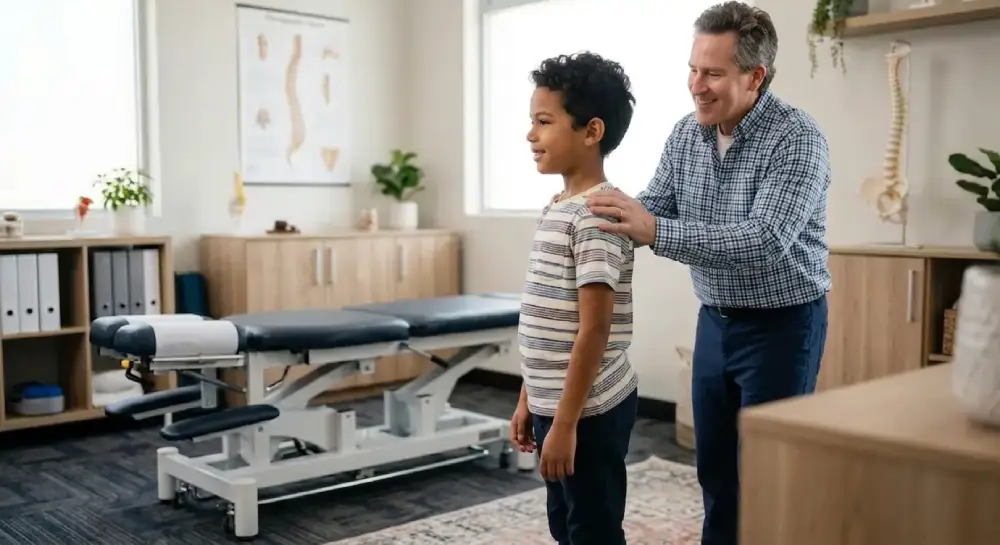
For parents, one of the hardest parts is figuring out whether something is simply temporary soreness or whether it deserves attention.
A chiropractic evaluation can provide a closer look at the musculoskeletal factors that may be contributing to a child's complaint.
Depending on the child and the reason for the visit, an evaluation may consider areas such as:
The purpose isn't to assume that every symptom requires an adjustment.
It is to determine what may be contributing to the problem, whether chiropractic care is appropriate and whether another provider or additional testing should be involved.
That distinction is especially important with children.
Pediatric Chiropractic Care at Synergy Medical Team
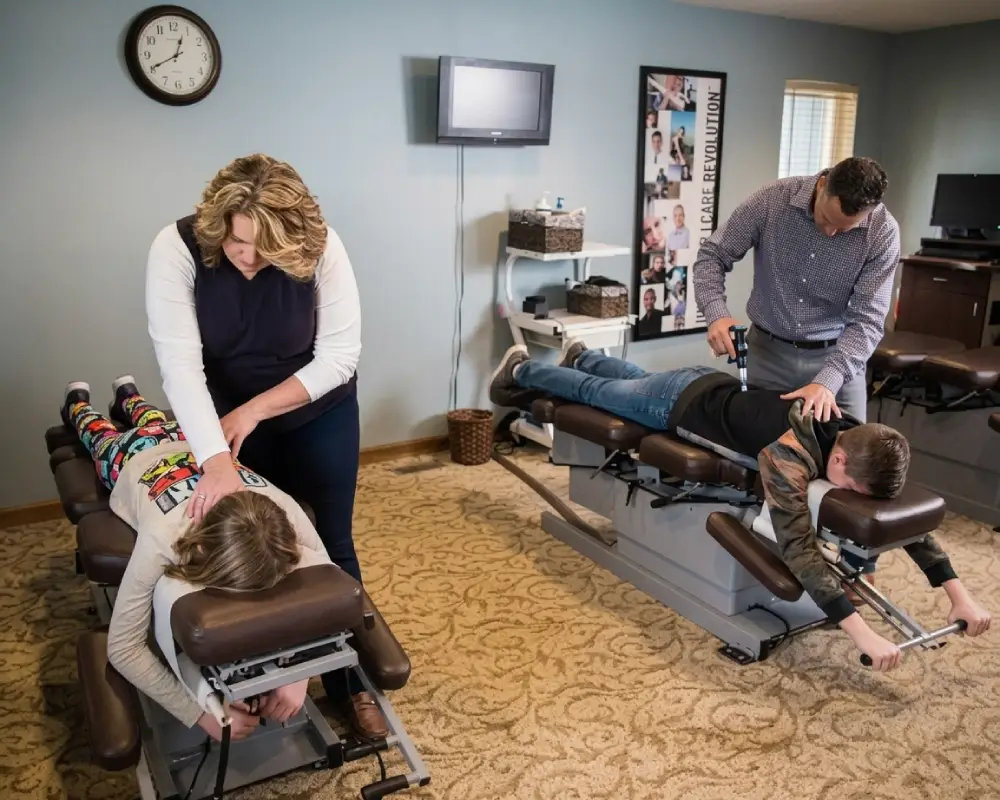
Synergy Medical Team is not an adult-only chiropractic office.
Dr. Charita Cooper, DC, CACCP, has specialized training in pediatric and family chiropractic care. Synergy's approach allows care to be adapted based on a patient's age, needs and comfort level.
The practice cares for children across different stages, from infants to school-age children and teenagers, as well as student athletes.
Dr. Patrick's background in extremities and joint health adds another perspective when complaints involve areas such as the feet, ankles, knees, shoulders or other joints.
Most importantly, an appointment shouldn't begin with the assumption that a child needs a specific treatment.
It should begin with figuring out what that child needs.
A Simple Back-to-School Body Check for Parents
Once every week or two, especially during the first several weeks of school and sports, parents can run through a quick mental checklist:
Is it comfortable, close to the body and being worn with both straps?
Any recurring soreness, stiffness or complaints after school?
Is there pain with sitting, movement, sports or carrying the backpack?
Is your child moving normally, or avoiding certain movements?
Has soreness begun showing up repeatedly during or after practice?
Any foot, heel or ankle complaints, or unusual wear on shoes?
Is discomfort interfering with sleep?
Has your child stopped wanting to participate in something they normally enjoy because it hurts?
And perhaps most importantly:
"Ask them."
Kids don't always volunteer this information.
A 30-second conversation may reveal something you've never noticed from the outside.
Frequently Asked Questions About Back-to-School Back and Neck Pain
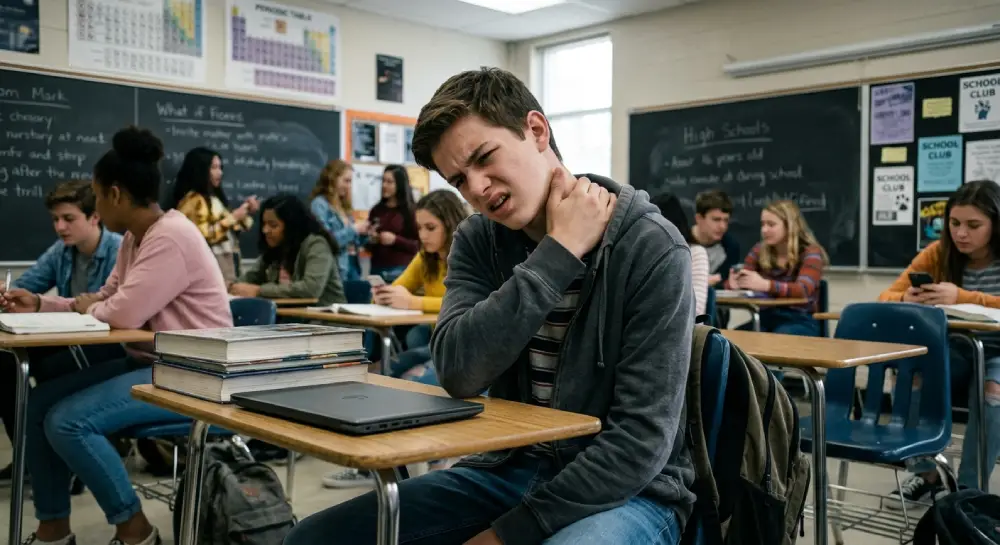
Can a heavy backpack cause back pain in kids?
A heavy or poorly fitted backpack can cause temporary discomfort, which is why the American Academy of Pediatrics recommends a properly fitted backpack, two shoulder straps and reasonable weight. However, systematic reviews have not found convincing evidence that backpack characteristics alone cause children to develop long-term back pain. [1,2]
How heavy should my child's backpack be?
The American Academy of Pediatrics recommends keeping a loaded backpack to no more than approximately 15% of the child's body weight in its backpack-safety guidance. [1]
The more practical signs to watch for are whether your child must lean forward, struggles to put the pack on or experiences discomfort while wearing it.
Should children use both backpack straps?
Yes. Using both straps helps distribute the load more evenly. The backpack should also be adjusted so it stays relatively close to the child's body. [1]
Can sitting at school cause back pain?
Some studies have found associations between sedentary behavior and spinal discomfort, but higher-quality longitudinal evidence has not established that sitting itself causes children to develop spinal pain. [3,4]
Regular movement is still beneficial for children's overall health and provides a simple way to break up long periods spent in one position.
Why does my child's neck hurt after school?
There are many possible causes, including muscle soreness, sports, prolonged periods in one position, previous injury and other musculoskeletal issues.
Research has identified an association between sedentary behaviors such as prolonged mobile-phone use and neck pain, but an individual child's symptoms need to be evaluated rather than assumed to have a single cause. [9]
When should I worry about my child's back pain?
Seek medical evaluation for persistent or worsening pain, significant trauma, neurological symptoms, bowel or bladder changes, fever or systemic illness, nighttime pain or other concerning symptoms. Back pain in very young children also deserves particular attention. [7]
Can children see a chiropractor?
Yes. Chiropractors may provide musculoskeletal evaluation and care to pediatric patients. The type of examination and any treatment should be appropriate for the child's age, history and individual needs.
At Synergy Medical Team, Dr. Charita Cooper has specialized training in pediatric chiropractic care, and the practice sees patients from infancy through adolescence.
Should my child get custom orthotics?
Not automatically.
Many children do not need orthotics simply because their feet appear flat. If a child experiences foot or lower-extremity pain, gait concerns or activity-related problems, an individual evaluation can help determine whether orthotics or another approach is appropriate. [8]
Looking for a Pediatric Chiropractor in Marysville, Ohio?
The start of a new school year is a major transition for a child's body as well as their schedule. If your child has started mentioning recurring back pain, neck pain, shoulder discomfort, foot pain, sports-related soreness or changes in movement, don't simply assume they'll grow out of it.
Find out what's going on. Dr. Charita Cooper and Dr. Patrick Cooper provide individualized chiropractic and musculoskeletal care for children, teenagers, athletes and families, serving Marysville and surrounding Central Ohio communities including Plain City, Dublin, Delaware, Bellefontaine and the surrounding area.
A conversation and proper evaluation can help determine the most appropriate next step for your child.
Call 937-642-4400 →References
1. American Academy of Pediatrics. Backpack Safety. HealthyChildren.org. Guidance on backpack selection, fit, weight and use.
2. Yamato TP, et al. Do schoolbags cause back pain in children and adolescents? A systematic review. British Journal of Sports Medicine. 2018. PMID: 29720469.
3. Calvo-Muñoz I, et al. Sedentary Behavior and Low Back Pain in Children and Adolescents: A Systematic Review and Meta-Analysis. Healthcare. 2026;14(2):233. PMID: 41595369.
4. Montgomery LRC, et al. Does sedentary behaviour cause spinal pain in children and adolescents? A systematic review with meta-analysis. British Journal of Sports Medicine. 2025;59(6):409-422. PMID: 39438037.
5. Dario AB, et al. The association between the weight of schoolbags and low back pain among schoolchildren: A systematic review, meta-analysis and individual patient data meta-analysis. 2020. PMID: 31421006.
6. American Academy of Pediatrics. Preventing Overuse Injuries in Young Athletes: AAP Policy Explained. HealthyChildren.org.
7. American Academy of Family Physicians. Back Pain in Children and Adolescents. American Family Physician. 2020;102(1):19-28.
8. Evans AM, Rome K, Carroll M, Hawke F. Foot orthoses for treating paediatric flat feet. Cochrane Database of Systematic Reviews. 2022;1(1):CD006311. PMID: 35029841.
9. Sedentary behavior and neck pain in children and adolescents: a systematic review and meta-analysis. PMID: 36686056.